

New Congressional Maps Draw Fire for Partisan Gerrymandering in North Carolina
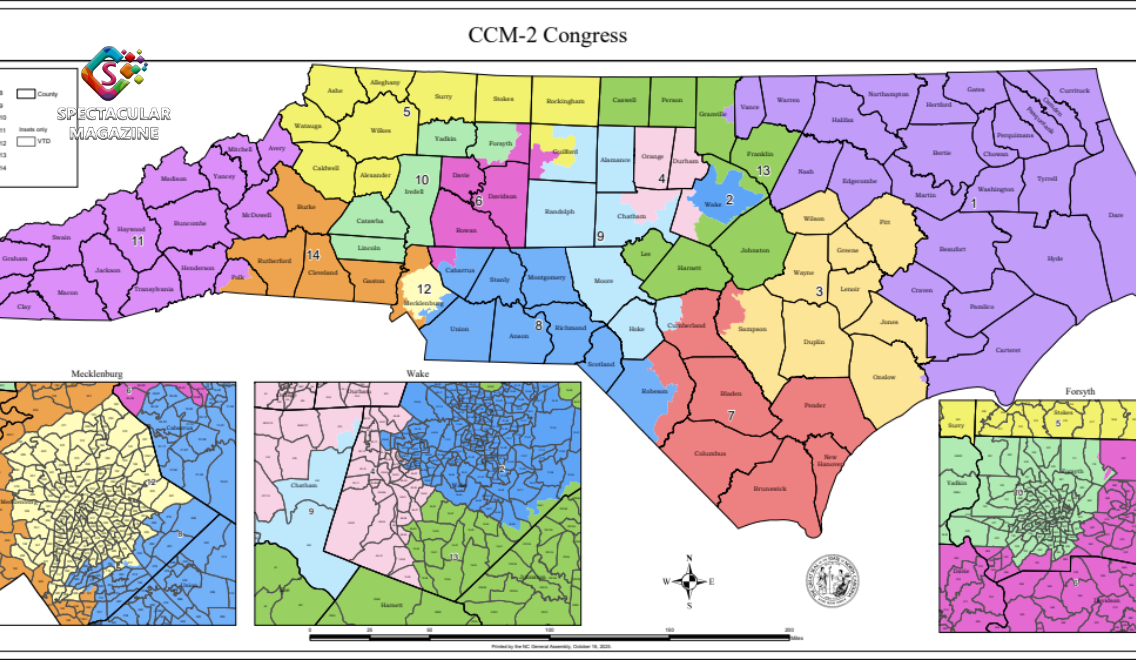
RALEIGH, N.C. — The North Carolina General Assembly has released new mid-decade congressional maps that critics say represent one of the most extreme partisan gerrymanders in recent history. Lawmakers are expected to approve the maps as early as next week, setting the stage for renewed legal and political battles over voting rights in a state long considered a national bellwether for redistricting disputes.
Advocates and voting rights groups warn that the legislature’s decision to redraw district lines mid-cycle—without meaningful public input—undermines confidence in the electoral process and weakens the voices of North Carolina’s communities of color. Early analyses suggest that the newly proposed districts split long-established communities and particularly disadvantage voters living in the state’s Down East region.

“This process erodes community voice and trust,” said one voting rights advocate. “When districts are manipulated for partisan gain, people lose faith that their votes matter.”
Just a few years ago, court-appointed Special Masters were tasked with creating fairer, more representative congressional maps after the courts struck down partisan gerrymanders. Those maps reduced county splits and better reflected North Carolina’s competitive political landscape. The new maps, critics argue, move the state backward—tilting power toward one party while limiting voters’ ability to shape policy decisions on issues such as health care, education, infrastructure, and economic opportunity.
If enacted, the proposal could shift North Carolina’s congressional balance dramatically. Observers predict that Republicans could claim as many as 11 of the state’s 14 congressional seats—nearly 80 percent of the delegation—despite North Carolina’s status as a politically divided swing state.
The redistricting effort follows months of political maneuvering in Raleigh, where Republican lawmakers recently secured full control of the state’s election boards and strengthened their influence over the courts. Voting rights advocates describe the move as part of a broader strategy to entrench partisan power ahead of the 2026 midterm elections, comparing it to similar gerrymandering tactics used in Texas.
“This is a direct attack on fair representation,” said another advocate. “By dismantling historic districts like North Carolina’s First Congressional District—long considered part of the state’s Black Belt—these maps will silence the voices of communities that have fought hardest to be heard.”
Ways for North Carolinians to Take Action
Voting rights organizations and community coalitions are mobilizing in response to the proposed maps, urging residents to get involved before the legislature’s vote next week.
1. Sign the Coalition Letter (Deadline: Sunday, 5:00 p.m.)
Organizations can add their names to a coalition letter urging lawmakers to halt mid-decade redistricting and commit to a transparent, data-driven process that protects voters’ rights.
2. Review and Compare the Maps
Residents can view the proposed maps on the NC General Assembly website and compare them with previous versions using the Redistricting & You tool, focusing on Congressional Districts 1 and 3.
3. Submit a Written Public Comment
Comments can be submitted through the legislature’s public portal. Voting rights groups have also provided sample talking points to assist in drafting comments.
4. Attend the Senate Committee Meeting (Monday, 10:00 a.m.)
The Senate Committee on Elections will meet Monday at 10 a.m. in Room 643 of the Legislative Office Building in Raleigh. Public comments may be limited to early arrivals. For assistance in preparing remarks, contact Tyler Daye at [email protected].
5. Join the Virtual Press Conference (Monday, 2:00 p.m.)
A coalition of civic organizations will host a virtual press conference following the committee meeting. Residents of Congressional Districts 1 and 3 are especially encouraged to participate. Those interested in speaking can email Joselle Torres at [email protected].
6. Participate in Virtual Coalition Hearings (Next Week)
In response to the legislature’s lack of formal public hearings, advocacy groups will host their own virtual public forums via Zoom, allowing residents to share how the proposed maps affect their communities.
As the legislature moves swiftly toward approving the new maps, advocates say public participation is more critical than ever.
“North Carolinians deserve fair maps drawn in the open—not behind closed doors,” said one organizer. “The future of our democracy depends on it.”