

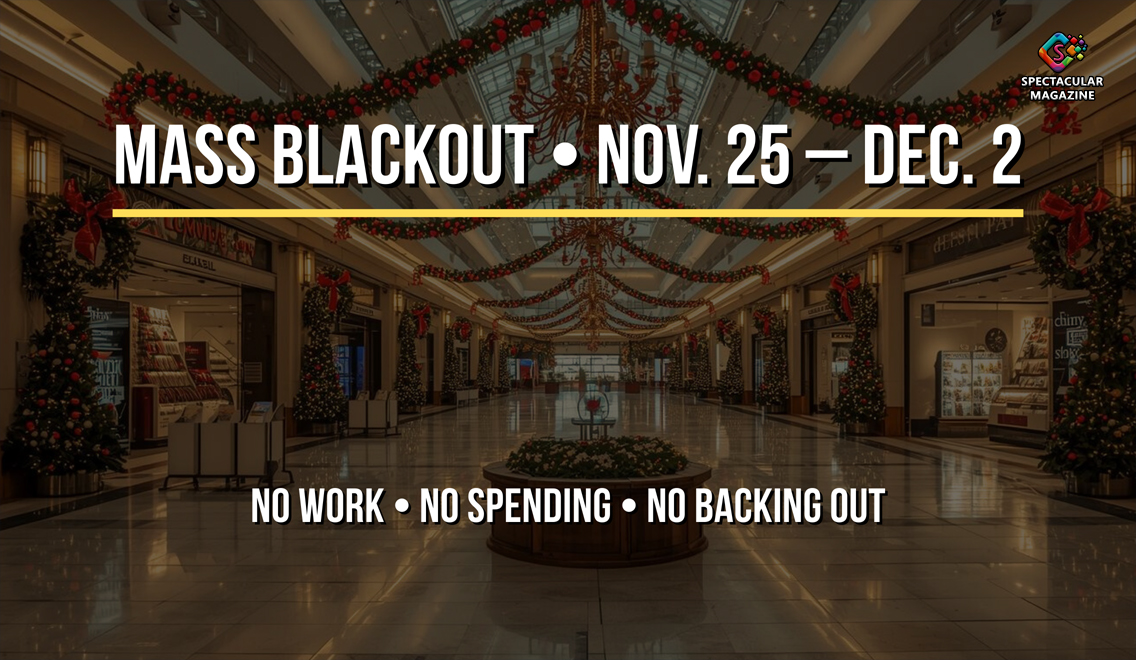
A Black Friday of Resistance: ‘Mass Blackout’ Movement Calls for Economic Protest Against Inequality
As store aisles fill with eager shoppers this Black Friday, a growing movement is calling for silence—economic silence. Organizers behind the Mass Blackout Movement (Nov. 25–Dec. 2) are urging Americans, particularly Black consumers, to shut down their spending in protest of policies and corporate practices they say have devastated communities and deepened inequality. The rallying cry? “No work. No spending. No surrender.”
The Movement: From Shopping Frenzy to Economic Standstill
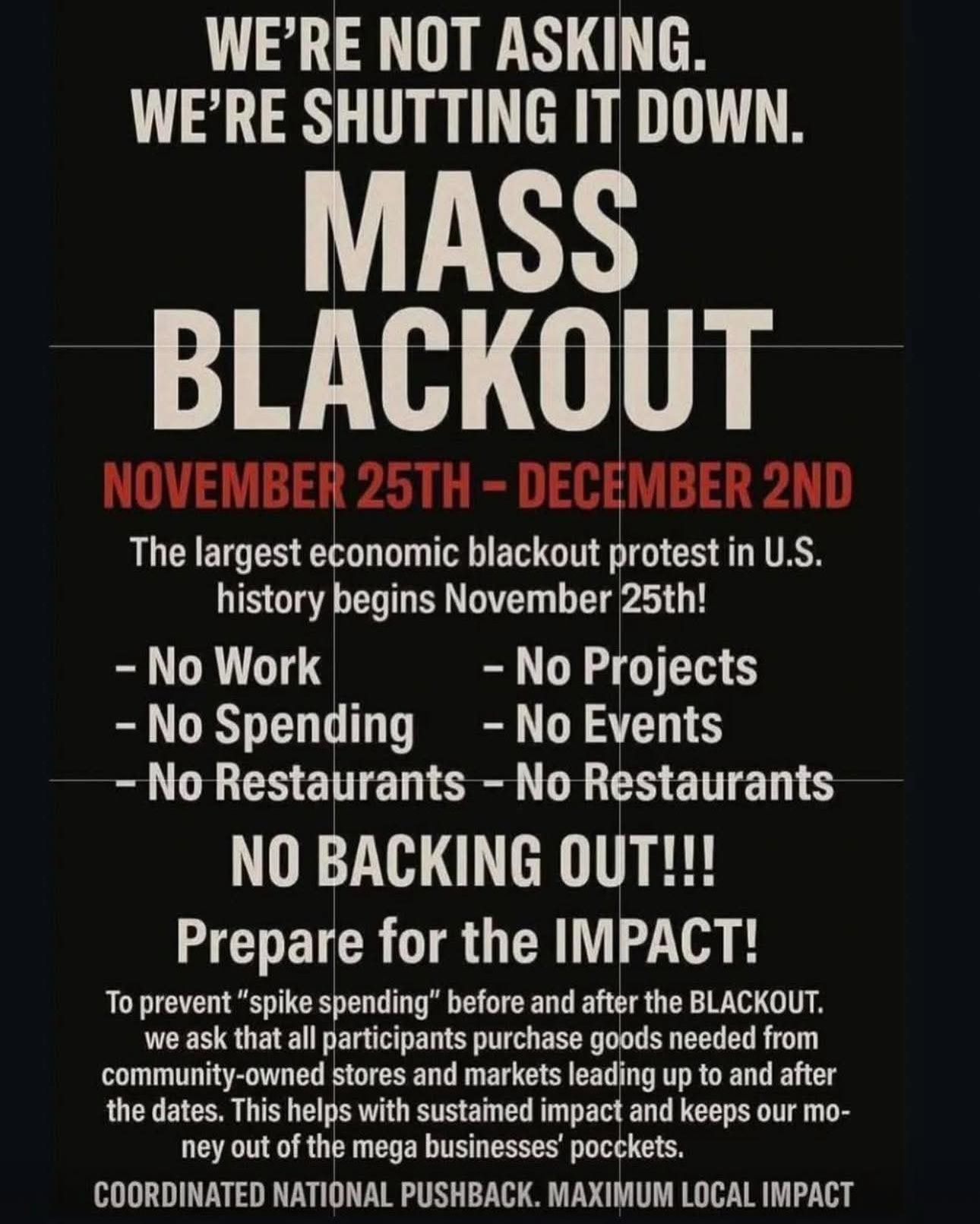
This year’s Black Friday arrives amid mounting frustration over economic inequities, job loss, and the erosion of opportunities for Black Americans. The Mass Blackout campaign—endorsed by the We Ain’t Buying It coalition—demands a complete halt to economic participation for one week.
Participants are being urged to skip shopping, dining out, and even attending events, redirecting their power toward community-owned businesses before and after the protest. The campaign’s organizers describe it as “the largest economic blackout protest in U.S. history,” a coordinated national pushback designed to expose the fragility of an economy that often profits from Black labor but fails to protect Black livelihoods.
Economic Fallout and the Call for Change
The movement comes at a time when Black Americans—particularly Black women—are facing what economists call a “quiet recession.” According to the National Partnership for Women and Families, more than 265,000 Black women have exited the workforce since January, while overall unemployment for Black women has reached its highest point in years.
“Under Donald J. Trump, Black women continue to face a crisis of disproportionately high unemployment,” said Congresswoman Ayanna Pressley. “This systematic pushout has dangerous consequences not only for Black women but for Black families and futures.”
Organizers argue that the Mass Blackout is more than a boycott—it’s a declaration that spending habits are a form of protest, and that withholding dollars can be a weapon for justice.
Corporate Accountability in the Crosshairs
Two corporations—Amazon and Home Depot—have found themselves at the center of controversy. Activists accuse them of supporting or benefiting from Trump-era policies that they say have rolled back diversity, equity, and inclusion (DEI) initiatives.
LaTosha Brown, co-founder of Black Voters Matter, said in a statement, “We’re not buying this foolishness. We’re not buying this racism. We’re not buying the abandonment of DEI. If they want to call it Black Friday, let’s show them what a Black Friday really looks like.”
While Home Depot has denied involvement in federal enforcement actions and Amazon has declined to comment on the protest, organizers remain steadfast. They say corporate America can no longer hide behind neutrality while Black workers and families bear the brunt of systemic inequity.
From Frustration to Economic Empowerment
Behind the call for the blackout lies a painful truth: federal policies have stripped away protections that once sustained the Black middle class. Cuts to food assistance, health care, and federal jobs have hit hardest in communities already struggling with rising costs and shrinking opportunities.
“This isn’t just about boycotting stores,” said one organizer in a recent livestream. “It’s about reminding the system that we built this economy—and we can stop it, too.”
A Black Friday Like No Other
For the millions choosing not to spend this week, the Mass Blackout is both a protest and a prayer for renewal. It’s an act of economic self-defense, grounded in solidarity and fueled by frustration.
As activist LaTosha Brown put it: “We’re not buying from companies that won’t stand with us. Our dollars will go elsewhere.”