

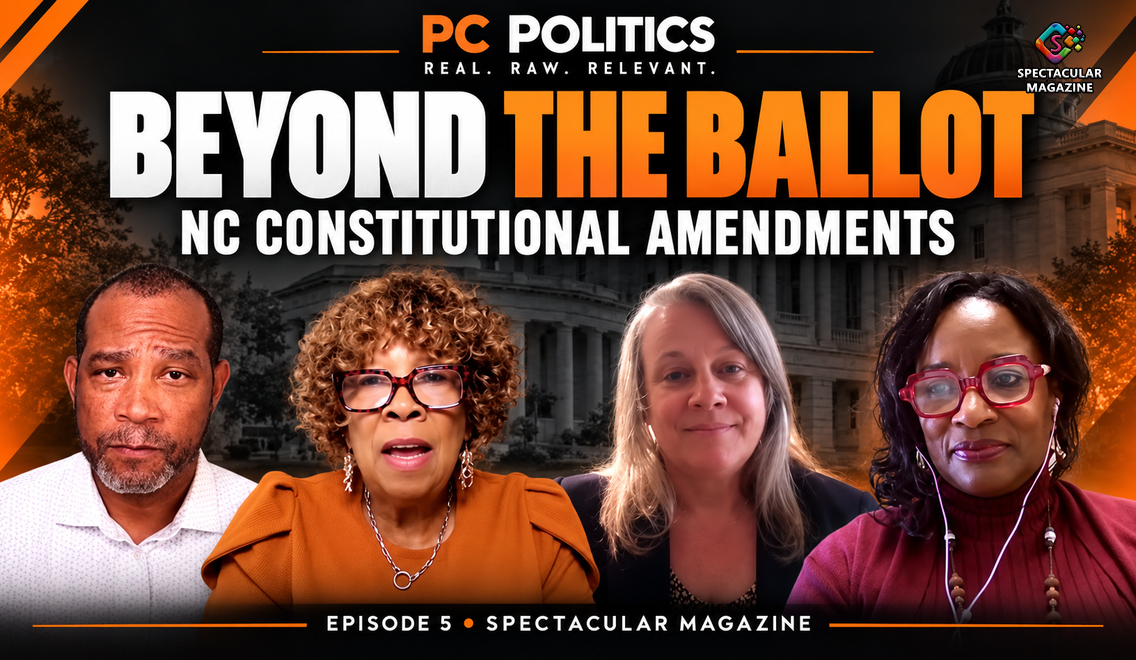
NC Constitutional Amendments 2026: What Voters Should Know About Taxes, Schools and Photo ID
Lower taxes may sound like an easy choice. But what happens when the tradeoff is less flexibility to fund schools, meet community needs or respond to a crisis? In this week’s episode of PC Politics, three North Carolina leaders explain why voters should look beyond the wording of the constitutional amendments on their November ballots.
DURHAM, N.C. — A promise of tax restraint can sound appealing to families struggling with rising costs. But three guests on the latest episode of PC Politics warn that North Carolina’s proposed constitutional amendments deserve a closer look—especially when it comes to public services, local decision-making and access to the ballot.
Joining host Phyllis Coley for this week’s conversation were Alexandra Sirota, Executive Director of the NC Budget & Tax Center; Dr. Mike Lee, Chair of the Durham County Board of Commissioners; and Dr. Michelle Laws, community advocate and CEO and Chief Consultant of Symbiotic Strategies.
All three urged voters to reject the amendments. Their discussion explored the difference between what the proposals expressly change and what those changes could mean for communities over time.
A Constitutional Change Can Outlast Today’s Politics

The proposals address three subjects: the maximum state income-tax rate, limits on local property-tax revenue growth, and the constitutional requirement for voter photo identification.
Sirota opened with a distinction that runs through the episode: an ordinary law and a constitutional amendment are not equally easy to change.
When policy becomes part of the constitution, she explained, future lawmakers face a more difficult process if they want to adjust it in response to new needs or emergencies.
Laws raised another concern: people who are not already connected to advocacy organizations may encounter the proposals for the first time while voting. For those voters, a brief description may not explain the full stakes.
An Income-Tax Ceiling Is Not a Guaranteed New Tax Cut
The income-tax proposal would reduce the maximum rate permitted by the state constitution from 7 percent to 3.5 percent. That ceiling is distinct from the rates established through tax legislation.
Sirota argued that voters should examine the consequences of limiting future revenue options alongside the appeal of preventing tax increases. She warned that expenses do not disappear when governments restrict one source of funding.
“The costs aren’t going to disappear,” Sirota said.
The panel explored whether the pressure could shift toward other taxes, fees or reduced services—and why those possibilities matter to families already managing tight budgets.
Property Taxes: Household Relief or Limits on Local Decisions?

The property-tax proposal would require the General Assembly to establish limits on increases in local property-tax levies. The amendment does not itself specify the numerical limit or formula, and it permits lawmakers to include exceptions.
That distinction matters: approval would not, by itself, guarantee a lower property-tax bill for an individual homeowner.
Lee connected the proposal to the practical work of governing a growing county. As more people move into Durham, demand for schools, health services and other public investments grows as well, he explained.
“Revenue has to come from somewhere,” Lee said during the discussion.
The conversation also addressed a question many residents will recognize: how can government help seniors and longtime homeowners struggling with tax bills while maintaining the services their communities need?
Photo ID and the Power to Participate
Laws emphasized that voting access underpins residents’ ability to influence every other policy decision.

The photo-ID amendment would expand the constitution’s requirement from in-person voting to all methods of voting. North Carolina already has photo-ID requirements in law for in-person and mail voting, with exceptions. ncleg.gov
The proposed constitutional text retains language allowing the legislature to establish exceptions. Voting against the amendment would not, by itself, repeal existing photo-ID laws.
The guests discussed concerns about barriers facing older voters, students and people with limited access to transportation or identification documents.
Watch Before You Decide
The full episode goes further into the guests’ arguments about affordability, public-school funding, property-tax relief and the relationship between state decisions and local budgets.
Before marking “For” or “Against,” review your sample ballot and the full amendment language. Watch the conversation above to hear the panel explain its concerns and recommendations in its own words.
North Carolina’s voter registration deadline is October 9 at 5 p.m. In-person early voting runs October 15 through October 31, ending at 3 p.m. Election Day is November 3. Visit NCSBE.gov for official voting information.
PC Politics — Real. Raw. Relevant. continues at SpectacularMag.com.