

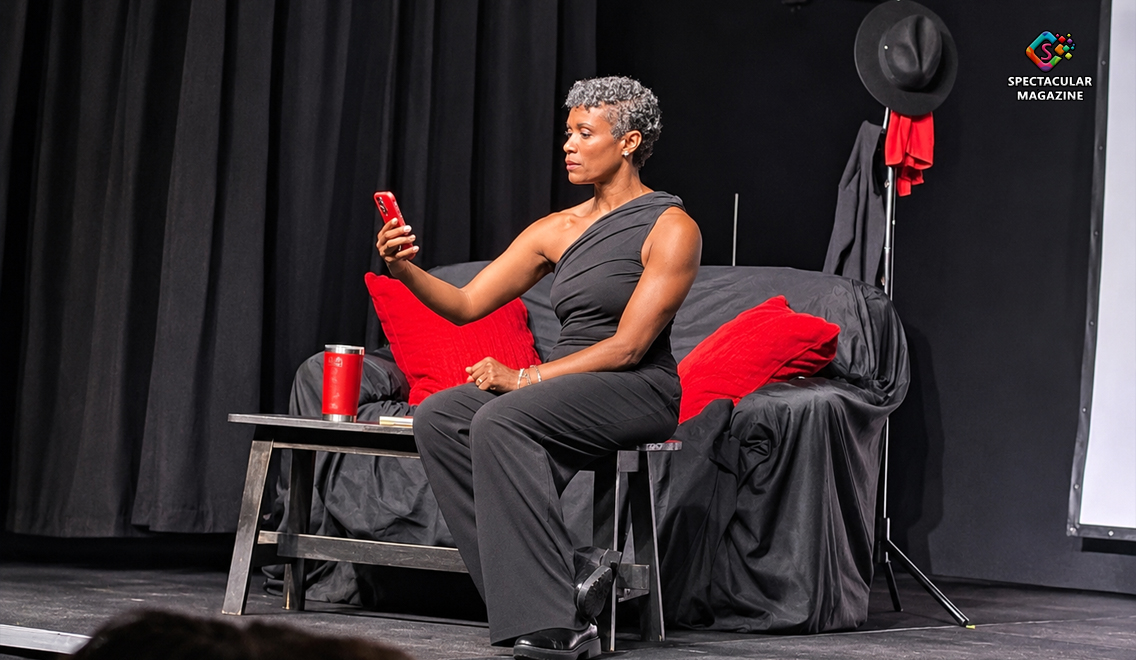
REVIEW: Durham’s Janora McDuffie Delivers Love, Laughter and Hard Truths in ‘Earth, Wind & Car Fire’
DURHAM, N.C. — I expected to laugh. I expected to be entertained. What I didn’t expect was to find myself fighting back tears as a woman onstage described an experience I knew all too well.
Waiting for cancer test results.
That agonizing period between undergoing medical tests and learning whether your life is about to change forever.
For anyone who has experienced it, those moments are unforgettable.

And when Janora McDuffie, a Durham native, shared that part of her journey during her one-woman show, Earth, Wind & Car Fire, I was no longer simply a theatergoer enjoying a performance.
I was a fellow cancer survivor recognizing a chapter of my own life in hers.
McDuffie’s remarkable production, presented at The Fruit as part of the Durham FRINGE Festival, is an entertaining, deeply personal, and surprisingly emotional journey through love, identity, marriage, race, and survival.
It is also a powerful reminder that sometimes life’s greatest challenges arrive when we’re already struggling to navigate others.
A Durham Girl Finds Her Way
McDuffie’s story begins with her life after college, tracing the experiences that eventually take her from Durham to Atlanta and later Los Angeles.
Along the way, she navigates relationships, career aspirations, and the complicated process of discovering and accepting her sexuality.
Her realization that she is attracted to women becomes an important turning point, but McDuffie refuses to reduce her life to a single defining characteristic.
Instead, she introduces audiences to the full complexity of becoming comfortable with who she is.
There are hilarious encounters, awkward discoveries, and moments of genuine vulnerability.
McDuffie’s storytelling is candid, often laugh-out-loud funny, and refreshingly unfiltered.
And throughout the performance, she proudly incorporates references to Durham, giving local audiences the added pleasure of recognizing the community that helped shape her.
Falling in Love—and Discovering Love Isn’t Always Simple
One of the production’s most compelling storylines involves McDuffie’s relationship with the woman who eventually becomes her wife.
She’s white. She’s a police officer. And she becomes the love of McDuffie’s life.
Their relationship introduces another layer to a story already exploring identity, acceptance, and family expectations.
McDuffie describes their destination wedding, which her wife’s parents did not attend.
However, the story doesn’t end with that disappointment.
Over time, family relationships evolve. Her in-laws welcome the couple into their home for holidays, and the families begin developing connections.
It’s a touching reminder that acceptance can be a process rather than a single moment.
But while their marriage brings love and happiness, it also places two women with very different lived experiences at the intersection of some of America’s most difficult conversations.
And those conversations become unavoidable in 2020.
George Floyd, Black Lives Matter, and a Marriage Under Pressure
When George Floyd was murdered by a Minneapolis police officer in May 2020, protests erupted across the country, forcing Americans to confront questions about race, policing, justice, and accountability.
For McDuffie, those questions weren’t confined to television news or public demonstrations.
They entered her marriage.
As a Black woman, McDuffie experienced the racial reckoning through the lens of her identity and lived experiences.
Her wife, meanwhile, was a white police officer.
The tensions surrounding Black Lives Matter, police accountability, and racial justice created difficult conversations and serious challenges within their relationship.
Could her wife understand what the protests represented to Black Americans?
Could McDuffie reconcile her love for a police officer with the anger and pain surrounding police violence against Black people?
What happens when the person you love experiences a defining national moment from a fundamentally different perspective?
McDuffie doesn’t offer easy answers.
Instead, she reveals the emotional consequences of navigating those differences within a marriage.
And just as the couple was confronting those challenges, life delivered another devastating blow.
Then Came Cancer
McDuffie was diagnosed with colon cancer.
The diagnosis arrived during the same period when she and her wife were navigating the tensions surrounding George Floyd’s murder and the nationwide racial justice protests.
Suddenly, an already complicated chapter of their lives became even more overwhelming.
McDuffie describes the medical testing and the unbearable waiting that follows—the time between undergoing tests and receiving results.
For me, this was the most emotionally powerful moment of the evening.
As a cancer survivor myself, I knew exactly what she was describing.
I remembered the uncertainty. The waiting. The questions that fill your mind while you desperately hope for good news.
And I remembered how difficult it can be to explain those feelings to someone who has never experienced them.
Listening to McDuffie recount that period brought tears to my eyes.
It wasn’t simply that she was describing a frightening medical experience.
She was describing something I had lived.
In that moment, the distance between performer and audience disappeared.
Here was a woman sharing one of the most vulnerable experiences of her life, and I found myself connecting with her in a way I hadn’t anticipated.
Her story also underscores a reality that cancer survivors understand: A diagnosis doesn’t arrive when life is convenient.
It doesn’t wait until relationships are stable, problems are resolved, or emotional challenges have passed.
It interrupts whatever life you’re living.
And somehow, you must find the strength to face it.
McDuffie’s willingness to share that experience so openly adds tremendous depth to an already compelling production.
Her story isn’t simply about discovering who she is. It’s also about surviving what life throws her way.
One Woman Commands the Entire Stage

What makes Earth, Wind & Car Fire especially impressive is McDuffie’s ability to bring so many emotions and experiences to life without a supporting cast.
For approximately an hour, she commands the stage through sheer personality, expressive movement, sharp comedic timing, and remarkable storytelling ability.
Her facial expressions alone are often enough to draw laughter.
She shifts effortlessly between portraying humorous encounters, recalling difficult conversations, and sharing intensely personal experiences.
One moment, audiences are laughing. The next, the room becomes quiet as the emotional weight of her story settles in.
That ability to move an audience from laughter to tears is the mark of a gifted performer.
The simple staging—a few furnishings, carefully chosen accessories, and projected images—allows McDuffie’s performance to remain the focus.
Directed by Joseph Megel, the production demonstrates that compelling theater doesn’t require elaborate sets or a large ensemble.
Sometimes, all it takes is one woman with an extraordinary story and the courage to tell it.
More Than an LGBTQ+ Story
Although McDuffie’s identity as a Black LGBTQ+ woman is central to the production, Earth, Wind & Car Fire reaches far beyond any single community.
It’s about discovering yourself.
It’s about loving someone whose experiences and perspectives differ from your own.
It’s about navigating family relationships that don’t always unfold as you hoped.
It’s about confronting difficult conversations surrounding race and justice.
And it’s about facing a life-threatening illness while trying to hold the other pieces of your life together.
At its heart, this is a story about resilience, authenticity, and the complicated beauty of being human.
McDuffie doesn’t present life as a collection of neatly resolved challenges.
She presents it as most of us experience it—unpredictable, messy, occasionally hilarious, sometimes heartbreaking, and filled with moments that test our strength.
That honesty is what makes the production so effective.
My Verdict: An Outstanding Performance Worth Experiencing
Janora McDuffie is an exceptional storyteller whose humor, vulnerability, and stage presence make Earth, Wind & Car Fire a memorable theatrical experience.
I attended Thursday night’s performance expecting an enjoyable evening.
I left with a deeper appreciation for a woman who had shared so much of herself with an audience of strangers.
I laughed at her stories.
I admired her willingness to discuss difficult subjects.
And when she described the uncertainty surrounding her cancer diagnosis, I cried because I understood.
That is what powerful theater can do.
It allows us to see the world through someone else’s experiences while unexpectedly recognizing pieces of ourselves.
For me, that was the greatest gift of McDuffie’s performance.
And as a fellow cancer survivor, I left with an even greater appreciation for the courage it takes not only to survive—but to share the journey.
One Final Opportunity to See the Show in Durham
Durham audiences have one remaining opportunity to experience Earth, Wind & Car Fire during the Durham FRINGE Festival.
Performance: Friday, November 6, 2026, at 7 p.m.
Doors Open: 6:30 p.m.
Location: The Fruit, 305 S. Dillard St., Durham
Written and Performed By: Janora McDuffie
Directed By: Joseph Megel
Running Time: Approximately 60 minutes
My recommendation? Don’t miss it.
You’ll laugh. You may cry. And you’ll almost certainly leave with something to think about.