

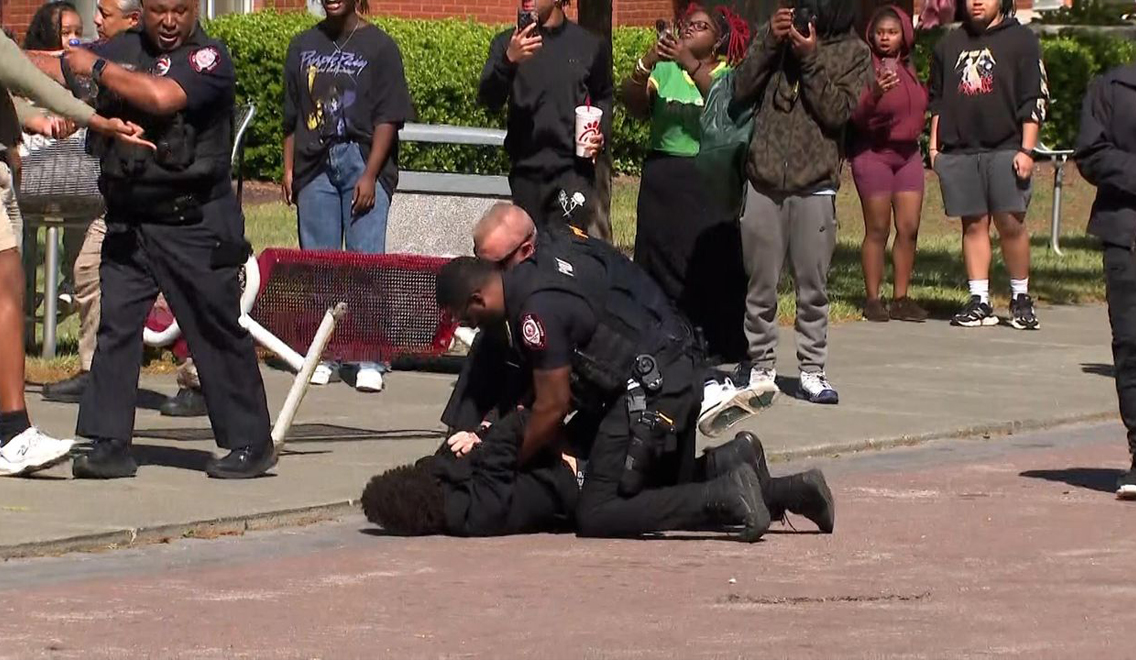
“We Won’t Be Silenced!”: Durham 5 Challenge Arrests After Explosive NCCU Protest
Durham, NC – A student-led protest at North Carolina Central University (NCCU) demanding action on unlivable housing conditions ended in the arrest of four students and one faculty member on April 16, 2025. Now referred to as the “Durham 5,” those arrested have become a flashpoint in an ongoing debate over student rights, police presence on campuses, and university accountability.
The demonstration, organized by a student activist group called the Panthers, was sparked by reports of mold, flooding, pests, and a lack of hot water in several dorms. Students and community members gathered on Brant Street and marched across campus in what began as a peaceful rally. But tensions quickly escalated.
Who Are the “Durham 5”?
The five arrested individuals include:
- Moriah Flowers – charged with resisting a public officer
- José Estrella – charged with three misdemeanors, including trespassing and failure to disperse
- Makaila Tinsley – charged with two misdemeanors and one felony for allegedly assaulting an officer
- Daniel “Cole” Atwood – a history adjunct professor, charged with resisting a public officer
- An unnamed student waving a Pan-African flag, identified by Panthers as a member
Videos recorded by students show Atwood being restrained and student protesters being forcibly taken to the ground by law enforcement.
Mounting Student Frustration
The protest unfolded just hours after NCCU hosted a separate university-sponsored event titled “Eagle Voices: Real Talk Pulse Check”, designed to address housing concerns. Panthers called the event a public relations distraction, noting the free Chick-fil-A offered to students didn’t compensate for months without basic necessities like hot water.
Political science student Jordan Knapper testified during the protest that his honors dorm had lacked hot water since January. Protesters held signs reading “Students Unite & Fight,” demanding lower rent, better conditions, and real dialogue—not staged forums.
Clashes with Police
Despite warnings about sound amplification and permit requirements, the Panthers proceeded with the protest. Officers from multiple agencies, including Durham Police and UNC-Chapel Hill officers, were deployed. The situation escalated when officers attempted to confiscate a student’s megaphone.
Witnesses say police used excessive force to restrain protesters. Additional arrests occurred near the New Student Center as the crowd swelled with supporters and bystanders leaving the official housing forum.
Legal Representation & Court Ruling
The Durham 5 are being represented by civil rights organizations Emancipate NC and the Southern Coalition for Social Justice (SCSJ), who claim the arrests were unconstitutional. On May 14, legal proceedings began in Durham County.
In a major legal victory on June 11, Superior Court Judge Michael J. O’Foghludha ruled that all body camera footage from the incident must be released to the public. NCCU, represented by the NC Department of Justice, had sought to limit the footage, arguing the public had no right to view it in full.
The court sided with the defense, saying the footage serves the public interest and may support First Amendment claims.
“This is a significant win for transparency, accountability, and our clients’ right to tell their side of the story,” said Dominique Erney, attorney for SCSJ.
Dawn Blagrove of Emancipate NC echoed that sentiment, calling the ruling a victory against “the suppression of the people’s voice.”
University’s Response & Broader Context
Chancellor Karrie G. Dixon, who was in Raleigh lobbying for campus funding during the protest, issued a statement reaffirming NCCU’s commitment to student safety and housing improvements. She cited efforts to secure $100 million in investment for campus upgrades, which reportedly began in July 2024.
However, student organizers and advocacy groups argue that real change remains elusive—and that students should not have to risk arrest to be heard.
The NCCU incident follows a broader pattern within the UNC System. In June 2025, Orange County District Attorney Jeff Nieman dropped all charges against 39 people arrested during pro-Palestinian protests at UNC-Chapel Hill, citing constitutional concerns.
What’s Next?
The Durham 5 case continues to unfold, with upcoming court dates and growing public scrutiny. Student groups, the NAACP, and civil rights attorneys are calling for:
- Full dismissal of charges
- Meaningful investment in campus housing improvements
- Dialogue with unaffiliated student organizations, not just SGA representatives
- Clear protest policies that protect student rights
“Our goal is not disruption for disruption’s sake,” said student organizer Devin Freeman, “but to demand safe, affordable housing and a voice in our future.”
Conclusion
Whether the April 16 protest becomes a turning point or another chapter in a long fight for equity at historically Black colleges will depend on what happens next—in courtrooms, in boardrooms, and in the hearts of students unwilling to be silent.