

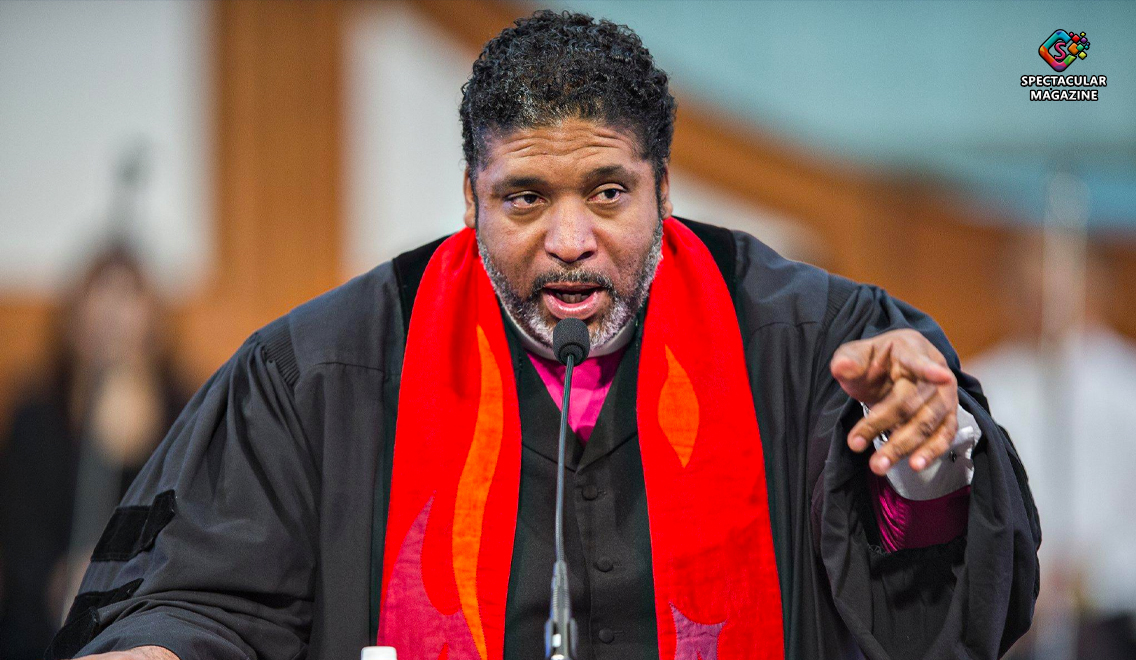
Rev. William Barber Sounds Alarm Ahead of 2026 Elections, Calls Black Church to Act
NEW HAVEN, CT – As the political climate intensifies ahead of the 2026 midterm elections, one of the nation’s most influential faith leaders is issuing a clear call: the Black Church must move beyond tradition and step into strategic, organized action. At the center of that message is a renewed focus on power, participation, and purpose.
Barber Urges Strategic Mobilization From the Pulpit
Speaking during the 2026 Public Theology & Public Policy Conference, Rev. Dr. William J. Barber II urged Black churches across the country to reclaim their prophetic voice and engage in intentional, targeted civic action.
The conference, hosted by Repairers of the Breach and the Yale Center for Public Theology & Public Policy, is being held April 12–14, 2026, as organizers prepare faith leaders for the upcoming election cycle.
Focus on Strategy, Not Just Turnout
Barber emphasized that broad messaging alone is not enough—calling instead for micro-level organizing focused on specific communities.
“Give us 1,000 ministers, and we can train how to do massive civic education… in targeted areas,” Barber said.
He pointed to North Carolina as a clear example, noting that hundreds of thousands of Black voters did not participate in recent elections, impacting outcomes in key districts.
Rather than general outreach, Barber urged churches to ask:
- Who is not being reached?
- Where should efforts be concentrated?
- What sustained engagement is happening locally?
The Stakes: Democracy and Daily Life
Barber connected political participation directly to real-world issues affecting communities, including:
- Cuts to Medicaid and food assistance
- Access to health care
- Economic inequality
- Systemic racism and poverty
He described these as “interlocking injustices” that threaten both communities and democracy itself.
A Multiracial Movement Rooted in Faith
While centered on the Black Church, Barber stressed that the movement must be broad and coalition-driven, bringing together people of different faiths and backgrounds.
The conference includes participants from:
- Christian denominations
- Jewish and Muslim communities
- Interfaith and social justice organizations
Drawing from the Civil Rights Movement, Barber highlighted the importance of unity across racial and religious lines.
Critique of Modern Religious Politics
Barber also challenged the role of certain religious groups in shaping today’s political landscape, particularly calling out the influence of white evangelical support for political power.
He warned against any version of faith that prioritizes ideology over justice:
“Any claim of good news that is just another form of extremist policies wrapped in religion is not good news.”
Training the Next Phase of Civic Leadership
The conference serves as a training ground for clergy, scholars, and activists, focused on:
- Voter engagement strategies
- Civic education
- Community-based organizing
Its central theme asks:
“What are the moral and spiritual issues of the 2026 elections?”
Conclusion
As the nation moves toward another pivotal election, Barber’s message is clear: the Black Church has both the history and the responsibility to lead. But this moment, he argues, requires more than inspiration—it demands strategy, coalition-building, and a renewed commitment to justice that reaches beyond the sanctuary.
While the political people of color movement lead by faith based is better than the other. The time is now to unite as Followers of Christ, to come together and stop fighting about which faith should be more glorified than the other. Our gospel says Christ is the Head of The Church and WE are His body. Meaning not one faith is better than the other, because we all fall short! The Father, The Son, and Holy Ghost be praised. Amen
It’s really a nice and useful piece of information. I am glad that you shared this helpful information with us. Please keep us up to date like this. Thanks for sharing.